Cart
0
Understanding Nettle: One of Nature's Most Mineral-Rich Plants
Walk through a field in the spring and you may encounter a plant that many people try to avoid. Its tiny hairs can leave a stinging sensation on the skin, earning it the name stinging nettle. Because of this reputation, nettle is often viewed as a nuisance rather than a valuable ally.
Yet for generations, herbalists and traditional cultures have recognized nettle as one of nature's most nourishing plants.
Beneath its sting lies a remarkable herb that has been used for centuries as food, tea, and botanical support. Rich in naturally occurring minerals and plant compounds, nettle has earned a respected place in herbal traditions throughout the world.
Looking Beyond the Sting
Many of the plants that support life are often overlooked because they do not fit modern expectations. Nettle is a perfect example.
Rather than producing bright flowers or exotic fruits, nettle grows abundantly in disturbed soils, along fence lines, near waterways, and in open fields. It thrives without human assistance and returns year after year.
Its resilience offers an important reminder: some of nature's greatest gifts are often hiding in plain sight.
When harvested properly and dried, steeped, or cooked, nettle loses its sting and becomes a deeply nourishing plant that can be enjoyed in many forms.

A Rich Source of Plant Nutrition
One reason nettle has remained popular among herbalists is its impressive nutritional profile.
Nettle contains naturally occurring minerals and nutrients including: Iron, Calcium, Magnesium, Potassium, Silica,
Chlorophyll and various vitamins and antioxidants.
Unlike many modern foods that are heavily processed, nettle provides these compounds in a whole-plant form that has been valued traditionally as both food and herb.
Because of this, some herbalists refer to nettle as a nourishing herb rather than simply a medicinal herb.
Its role is often associated with supporting the body through consistent nourishment rather than quick fixes.
Nettle as Food
One of the most interesting things about nettle is that it has historically been consumed as food.
Young nettle leaves have been added to soups, broths, stews, and cooked greens. Once heated or dried, the stinging hairs become inactive.
In many traditional cultures, nettle was gathered during springtime when fresh greens were limited after winter. It served as a valuable seasonal food and remains a favorite among wild food enthusiasts today.
This highlights an important distinction in herbalism.

Not every beneficial plant needs to be viewed as a supplement. Sometimes the most supportive herbs are simply foods that have been forgotten.
The Tradition of Nettle Tea
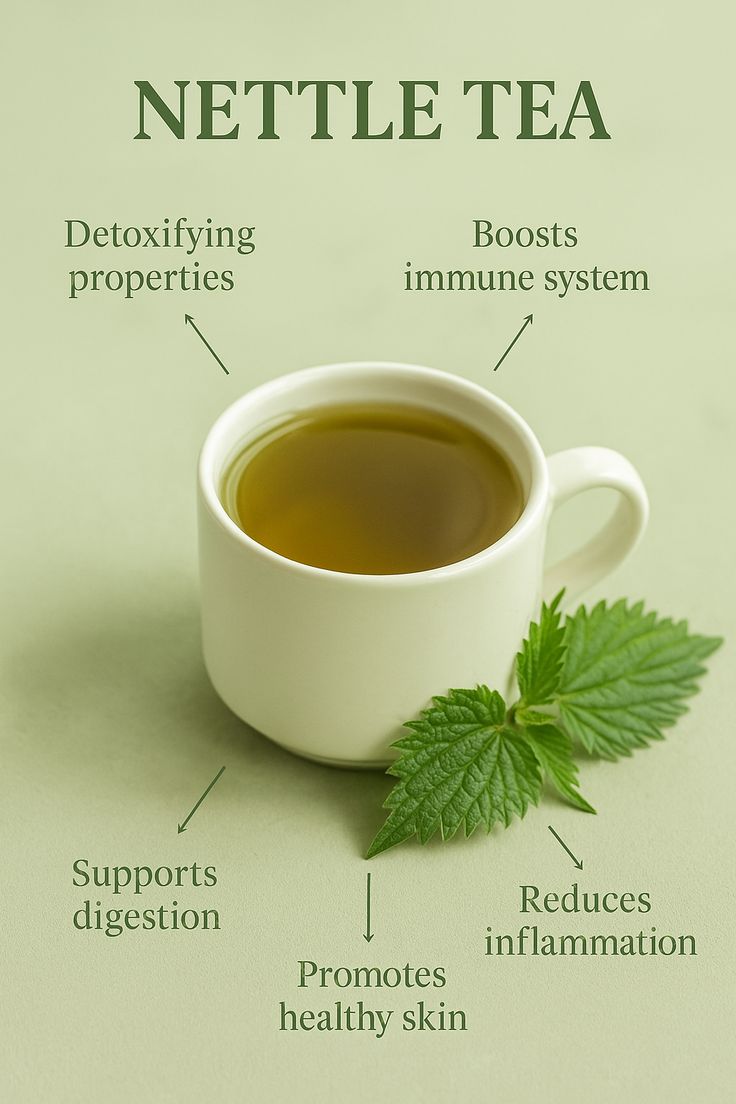
Perhaps the most common way people use nettle today is as a tea or infusion.
A simple nettle tea can be made by steeping dried leaves in hot water. Some herbalists prefer a stronger preparation known as a long infusion, where nettle is steeped for several hours to extract more of its naturally occurring minerals.
Many people enjoy nettle tea because it is earthy, grounding, and easy to incorporate into a daily routine.
Rather than viewing herbs as something that must only be used when a problem appears, traditional herbalism often emphasizes developing a relationship with supportive plants over time.

Learning From Resilient Plants
There is something symbolic about nettle.
It is strong, adaptable, and often misunderstood.
Many people encounter only the sting and never discover the nourishment beneath it.
In some ways, this mirrors how we often move through life. We make quick judgments based on first impressions and overlook deeper value that requires patience and understanding.
Nature has a way of teaching lessons through observation.
Nettle reminds us that what appears harsh on the surface may contain hidden gifts.
A Final Reflection
Modern wellness often focuses on finding the next breakthrough solution, the newest supplement, or the latest trend.
Nettle offers a different perspective.
It reminds us that support for the body can sometimes be found in simple, humble plants that have been growing around us all along.
Its history as both food and herb reflects a deeper truth found throughout traditional herbalism: nourishment is not always about complexity. Sometimes it is about reconnecting with the plants, traditions, and natural rhythms that humans have relied upon for generations.
The next time you see nettle growing in a field or along a woodland edge, consider looking beyond the sting.
You may discover one of nature's most remarkable plants.